Fire Damage Restoration Is About More Than Rebuilding
A fire can change someone’s life in a matter of minutes. Even a relatively small kitchen fire or electrical fire can leave behind extensive smoke damage, soot residue, water damage from firefighting efforts, structural concerns, and lingering odors that affect every room in a home or business.
For property owners across Buffalo, Cheektowaga, Amherst, Williamsville, Lancaster, West Seneca, Orchard Park, Hamburg, Niagara Falls, and throughout Western New York, recovering after a fire can feel overwhelming. Questions often arise immediately:
- Is my home safe to enter?
- Can smoke odors be removed?
- Will my belongings be salvageable?
- How long will restoration take?
- What should I do first?
- Will my insurance cover the damage?
At ServiceMaster by Phoenix, fire damage restoration is approached with the understanding that every loss is unique. The objective is not simply to repair a building, but to restore safety, cleanliness, functionality, and peace of mind while helping customers navigate one of the most stressful experiences they may ever face.
What Happens Immediately After a Fire?
Once the fire department has extinguished the fire and authorities determine the property is safe to access, restoration efforts typically begin with emergency stabilization.
This initial phase may include:
- Securing the property from further damage
- Boarding broken windows
- Installing temporary roof coverings if needed
- Evaluating structural stability
- Assessing smoke, soot, and water damage
- Identifying salvageable materials
- Documenting the loss
- Developing a restoration plan
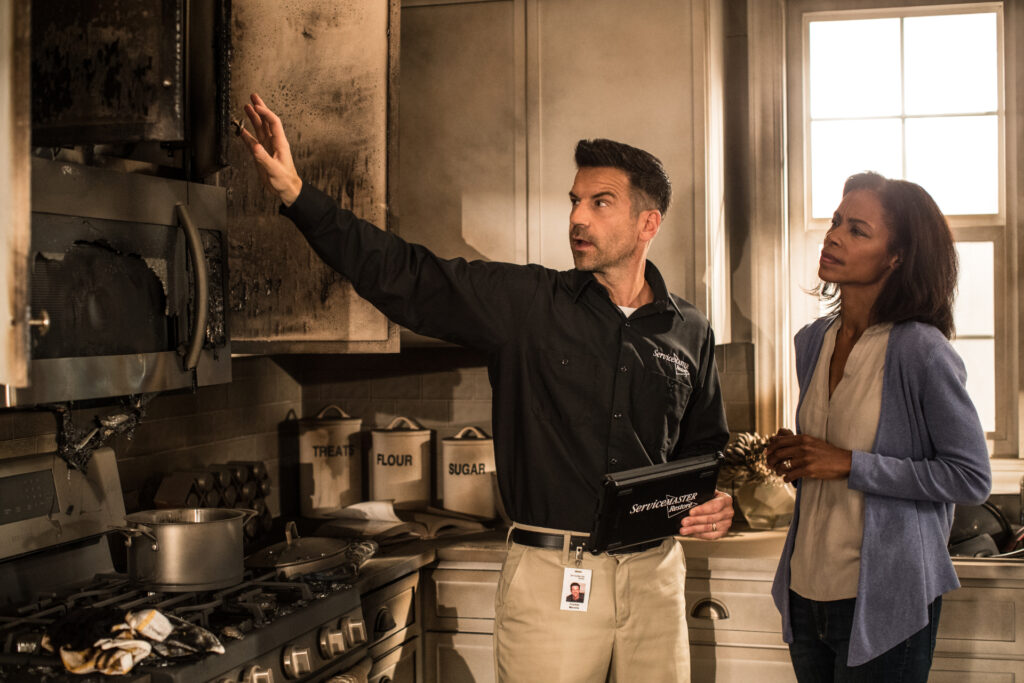
Although visible fire damage often receives the most attention, smoke and soot can travel throughout an entire structure—even into rooms that never came into contact with flames. Because of this, a thorough inspection is essential before cleanup begins.
Fire Damage Is Often More Extensive Than It Appears
Many people are surprised to learn that flames may account for only part of the overall damage.
A typical fire can also produce:
- Thick smoke residue
- Acidic soot deposits
- Strong odors
- Corrosive residue on electronics
- Water damage from firefighting efforts
- Elevated humidity inside the building
- Structural weakening
- Damage to HVAC systems
- Indoor air quality concerns
Without professional cleaning, smoke residue can continue damaging surfaces long after the fire has been extinguished.
Understanding Smoke Damage
Smoke behaves differently depending on what materials burn.
Wood, plastics, upholstery, electronics, insulation, synthetic flooring, food products, and household chemicals each produce different types of smoke residue.
These residues may cling to:
- Walls
- Ceilings
- Flooring
- Cabinets
- Furniture
- Window coverings
- Clothing
- Personal belongings
- HVAC ductwork
Professional restoration involves identifying the type of smoke residue present so the appropriate cleaning methods can be used.
The Challenges of Soot Removal
Soot is far more than ordinary dirt.
It consists of microscopic carbon particles mixed with oils, acids, and combustion byproducts that can permanently stain or damage surfaces if cleaned improperly.
Attempting to wipe soot away using household cleaners may actually spread the residue or force it deeper into porous materials.
Professional cleaning methods vary depending on the affected surface and may include:
- Dry chemical sponges
- HEPA vacuuming
- Specialized restoration detergents
- Controlled wet cleaning
- Abrasive cleaning techniques where appropriate
- Surface sealing and refinishing when necessary
The objective is always to remove contaminants while preserving as many original materials as possible.
Eliminating Smoke Odors
One of the most persistent reminders of a fire is the lingering smell of smoke.
Unfortunately, simply opening windows or spraying air fresheners does not remove smoke odors.
Smoke particles penetrate:
- Drywall
- Insulation
- Upholstered furniture
- Carpeting
- Wood framing
- Fabrics
- HVAC systems
- Personal belongings
Professional odor removal focuses on eliminating the source of the odor—not masking it.
Depending on the conditions, restoration professionals may use:
- Thermal fogging
- Hydroxyl generators
- Ozone treatments (used only in unoccupied spaces and under controlled conditions)
- HEPA air scrubbers
- Activated carbon filtration
- Specialized cleaning agents
- Sealing products for heavily affected structural materials
By addressing odor at its source, restoration professionals help return the indoor environment to a clean and comfortable condition.
Water Damage Often Follows Fire Damage
An important but often overlooked aspect of fire restoration is water mitigation.
Firefighters use large volumes of water to suppress flames, and that water can soak:
- Flooring
- Drywall
- Insulation
- Cabinets
- Furniture
- Structural framing
- Finished basements
- Commercial spaces
If the property is not dried promptly, secondary issues such as mold growth, wood swelling, and additional material deterioration can occur.
Because ServiceMaster by Phoenix provides both fire and water damage restoration services, the team can address these interconnected issues through a coordinated restoration plan.
Can Personal Belongings Be Saved?
Many homeowners assume everything exposed to smoke must be discarded.
In reality, many items can often be cleaned and restored depending on the extent of the damage.
Commonly restored items may include:
- Furniture
- Clothing
- Artwork
- Photographs
- Electronics (subject to evaluation)
- Office equipment
- Documents
- Decorative items
- Family heirlooms
Each item is evaluated individually to determine the most appropriate restoration method.
Commercial Fire Restoration
A fire affecting a business creates challenges beyond repairing the building itself.
Downtime can lead to:
- Lost revenue
- Interrupted operations
- Customer inconvenience
- Employee displacement
- Inventory loss
- Equipment damage
- Supply chain disruptions
ServiceMaster by Phoenix provides commercial restoration services designed to stabilize affected properties quickly so businesses can begin the recovery process as efficiently as possible.
Commercial restoration projects may involve:
- Office buildings
- Retail centers
- Restaurants
- Manufacturing facilities
- Warehouses
- Schools
- Healthcare facilities
- Apartment complexes
- Government buildings
- Religious organizations
The goal is to minimize business interruption while maintaining safety and quality throughout the restoration process.
Reconstruction After a Fire
Once emergency mitigation, cleaning, drying, and deodorization have been completed, reconstruction may begin.
Depending on the severity of the loss, reconstruction can include:
- Drywall replacement
- Flooring installation
- Trim and finish carpentry
- Cabinet replacement
- Interior painting
- Roofing repairs
- Structural framing
- Ceiling restoration
- Electrical coordination
- Plumbing coordination
Having one company manage both restoration and reconstruction helps streamline communication and maintain continuity throughout the project.
Why Property Owners Choose ServiceMaster by Phoenix
Recovering from a fire requires more than technical expertise—it requires compassion, responsiveness, and clear communication.
ServiceMaster by Phoenix understands that customers are often facing uncertainty, emotional stress, and difficult decisions. From the initial emergency response through the final stages of reconstruction, the team works to provide professional guidance, quality workmanship, and reliable service every step of the way.
With 24/7 emergency availability, experience serving residential and commercial properties throughout Western New York, and a commitment to helping customers restore both their property and their peace of mind, ServiceMaster by Phoenix continues to be a trusted restoration partner for communities across the region.