Understanding Mold: Why It Deserves Immediate Attention
Finding mold inside a home or business can be unsettling. Whether it’s discovered after a basement flood, hidden behind drywall following a plumbing leak, or growing in an attic due to poor ventilation, mold is often a sign that excess moisture has been present for an extended period.
Many property owners first notice a musty odor, discoloration on walls or ceilings, or signs of previous water damage. In many cases, however, mold remains hidden behind finished surfaces until a professional inspection identifies the source of the problem.
At ServiceMaster by Phoenix, mold remediation begins with identifying and addressing the underlying moisture issue. Simply cleaning visible mold without correcting the source of moisture can allow the problem to return. Effective remediation focuses on both removing mold contamination where appropriate and reducing the conditions that support future growth.
Throughout Buffalo, Cheektowaga, Amherst, Williamsville, Lancaster, Orchard Park, Hamburg, West Seneca, Niagara Falls, Lockport, and communities across Western New York, the combination of older homes, seasonal humidity, basement moisture, and water damage can create conditions where mold may develop if moisture is not addressed promptly.
What Is Mold?
Mold is a naturally occurring type of fungus that exists both indoors and outdoors. Mold spores are microscopic and are commonly present in the environment. Under the right conditions—primarily moisture and a suitable food source such as wood, drywall paper, insulation, or dust—spores can begin to grow and colonize surfaces.
Mold is not unusual in nature, but indoor mold growth should be addressed because it indicates an underlying moisture problem.
Why Does Mold Grow Inside Buildings?
Mold requires three primary conditions:
- Moisture
- Organic material
- Time
Building materials commonly provide the organic material needed for growth. When water from leaks, flooding, condensation, or elevated humidity remains present, mold may begin colonizing affected materials.
Common causes include:
Water Damage
Burst pipes, leaking plumbing, overflowing appliances, roof leaks, or storm intrusion can introduce moisture into wall cavities, flooring systems, insulation, and ceilings.
Basement Moisture
Many Western New York homes experience seasonal groundwater pressure, foundation seepage, or sump pump failures that allow moisture to accumulate in lower levels of the home.
Roof Leaks
Small roof leaks often remain unnoticed for months while moisture slowly affects insulation, roof decking, and attic framing.
High Indoor Humidity
Bathrooms, kitchens, laundry rooms, and poorly ventilated areas may experience elevated humidity that encourages mold growth on susceptible surfaces.
Condensation
Cold surfaces such as windows, poorly insulated walls, HVAC components, or plumbing lines can produce repeated condensation that contributes to mold development.
Signs That Mold May Be Present
Visible mold is not always the first indication of a problem.
Property owners may notice:
- Persistent musty odors
- Water stains
- Peeling paint
- Bubbling drywall
- Warped flooring
- Ceiling discoloration
- Damp carpeting
- Condensation issues
- Previous flooding
- Long-term plumbing leaks
Because mold often develops behind walls or beneath flooring, a professional evaluation may be necessary even when little mold is visible.
Why Moisture Control Matters
One of the most important principles of mold remediation is that mold cannot be permanently addressed without eliminating excess moisture.
Professional remediation therefore focuses on:
- Identifying moisture sources
- Repairing leaks
- Drying affected materials
- Improving ventilation where appropriate
- Removing damaged materials when necessary
- Cleaning affected areas
- Verifying acceptable moisture levels before reconstruction
This approach helps reduce the likelihood of recurring mold problems.
The Mold Remediation Process
Although every project differs, professional mold remediation generally follows a structured process.
Step 1 – Inspection and Assessment
The restoration team evaluates the affected areas to determine:
- The apparent extent of mold growth
- Areas affected by moisture
- Building materials involved
- Possible sources of water intrusion
- Safety considerations
- Scope of remediation
Step 2 – Containment
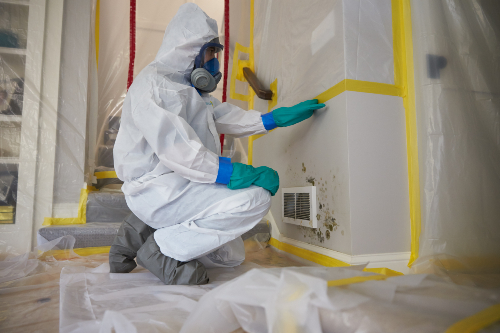
To reduce the spread of mold spores during remediation, containment barriers may be installed around affected areas.
Depending on the project, containment may include:
- Plastic containment walls
- Controlled access points
- Negative air pressure systems
- HEPA-filtered air scrubbers
Containment is especially important when remediation involves larger areas or occupied buildings.
Step 3 – Air Filtration
Professional HEPA filtration equipment helps capture airborne particles during remediation activities.
Air filtration may continue throughout the project to support cleaner working conditions within the contained area.
Step 4 – Removal of Damaged Materials
Some porous materials cannot be effectively restored once mold growth has become extensive.
Depending on the situation, remediation may involve removing:
- Drywall
- Insulation
- Carpet padding
- Ceiling tiles
- Certain wood products
- Other affected materials
Whenever practical, restoration professionals seek to preserve materials that can be safely cleaned rather than replacing them unnecessarily.
Step 5 – Cleaning and Surface Treatment
Remaining structural materials are carefully cleaned using methods appropriate for the type of surface and extent of contamination.
Cleaning may include:
- HEPA vacuuming
- Damp wiping
- Specialized antimicrobial cleaning products where appropriate
- Mechanical cleaning methods
- Detailed surface preparation before reconstruction
Step 6 – Drying
Moisture monitoring continues until structural materials reach acceptable drying goals.
Drying is a critical step because rebuilding before materials have dried adequately may increase the risk of future moisture-related issues.
Step 7 – Reconstruction
After remediation is complete and the affected area has been properly cleaned and dried, reconstruction can begin.
Depending on the project, reconstruction may include:
- Drywall installation
- Painting
- Flooring replacement
- Trim installation
- Cabinet replacement
- Finish carpentry
Having restoration and reconstruction coordinated through one company can simplify scheduling and communication for property owners.
Mold in Commercial Buildings
Commercial properties present additional challenges because mold can disrupt business operations, affect tenants, or interfere with customer access.
ServiceMaster by Phoenix provides mold remediation services for a variety of commercial properties, including:
- Office buildings
- Retail centers
- Healthcare facilities
- Schools
- Apartment communities
- Industrial buildings
- Restaurants
- Municipal facilities
The objective is to perform remediation safely while minimizing operational disruptions whenever possible.
Preventing Mold After Water Damage
One of the most effective ways to reduce the likelihood of mold growth is to respond quickly after water damage occurs.
Property owners should:
- Address water intrusion promptly.
- Remove standing water as soon as it is safe to do so.
- Dry affected materials thoroughly.
- Repair plumbing leaks.
- Maintain gutters and downspouts.
- Ensure proper grading around the foundation.
- Monitor humidity levels indoors.
- Schedule professional restoration when significant water damage occurs.
Rapid mitigation can often reduce both restoration costs and the extent of structural damage.
Why Professional Mold Remediation Matters
While small areas of surface mold may sometimes be addressed by property owners, larger or hidden mold problems often require specialized equipment, containment procedures, moisture detection technology, and restoration expertise.
ServiceMaster by Phoenix approaches mold remediation with a focus on identifying moisture sources, protecting unaffected areas, restoring damaged building materials where practical, and helping property owners return their homes or businesses to a safe, clean, and comfortable condition.
For homeowners and businesses throughout Western New York, responding promptly to water damage and addressing moisture issues early can make a significant difference in preventing more extensive restoration needs in the future.